

Om implantatbyte
For implant replacement at the Victoria Clinic in Stockholm, the technique and implants are tailored to your unique needs to achieve a natural and safe result. Medical preparations, including ECG and blood tests, ensure optimal safety. The surgery is performed with a focus on minimal bleeding and is led by experienced surgeons and anesthesiologists. An overnight stay is included for extra security, along with 10 years of follow-up care.
We offer implants from Motiva, Mentor, and Silimed, known for high biocompatibility and a reduced risk of complications. All implants come with a lifetime warranty and are customized to meet individual needs.
Quick facts about the procedure
Surgery time: 1-2 hours
Surgery: Performed under anesthesia or local anesthesia.
Time at the clinic: You arrive on your surgery day at 7:00 AM and go home the next morning at 8:30 AM.
Sick leave: 2-3 weeks

Before the surgery
Prior to your implant replacement, you will receive detailed instructions for the best possible preparation, including information on diet, medication, exercise, blood tests, and InBody measurements.
We take a holistic approach to optimize your health and ensure a quick recovery. All preparations are included in the price, and our goal is to provide safety and peace of mind both before and after your procedure.
In some cases, the procedure is combined with fat transfer—a so-called hybrid breast augmentation—where the patient’s own fat is used to enhance symmetry and shape. This allows for tailored solutions based on each individual’s unique anatomy.

During surgery
The implant replacement is performed under general anesthesia or local anesthesia, ensuring you are pain-free throughout the procedure. You will stay at least one night at the Victoria Clinic.
After the operation, you should expect some swelling and soreness, usually under the breast, which typically reaches its peak on the second or third day before subsequently subsiding.
You will receive pain medication to take home with you, and after three weeks, you will return to us for follow-up and evaluation.

Efter operationen
We recommend that you do not exercise at all during the first six weeks after an implant replacement. Walking, however, is fine right after the operation. After six weeks, you can start exercising.
However, you should avoid exercise that affects the chest muscles for three months if the implants are placed under the muscle. Even “bouncy” activities like jogging and horse riding should be avoided.
Results
The final result will not be visible immediately. You will experience swelling during the first 72 hours, The implants have not “settled” yet, and the breast won’t be fully rounded. After six weeks, your sutures will begin to absorb, and the implants will settle. Between three to six months post-surgery, the final shape will become visible, and after two years, when the scar tissue has softened, the breasts will have achieved their final form.
Before and After Pictures
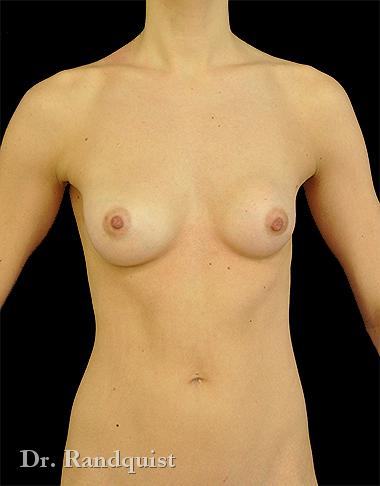
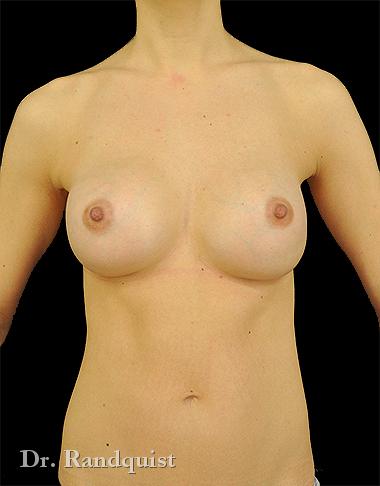
29 years old, 170 cm, 55 kg, 280 cc
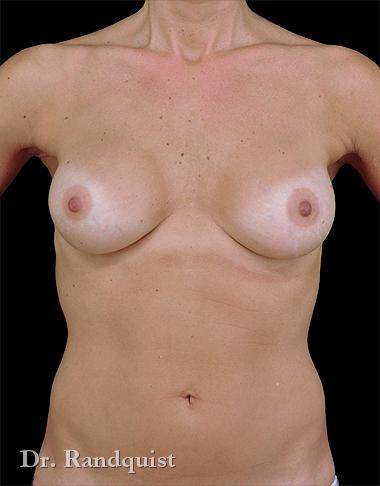
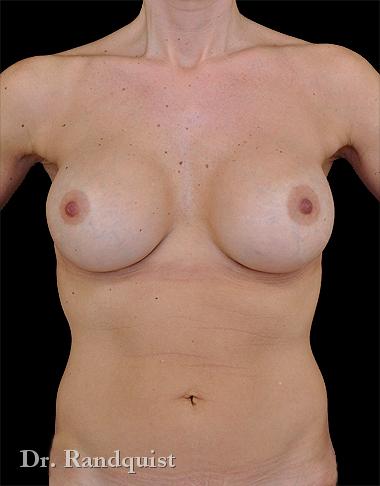
43 years old, 170 cm, 58 kg, 2 children
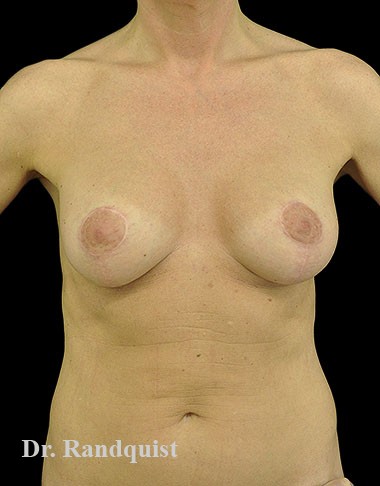
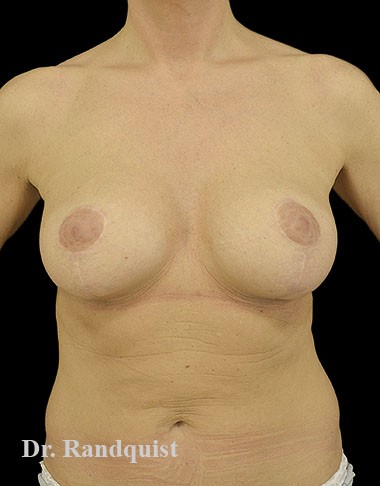
45 years old, 163 cm, 56 kg, 335 cc
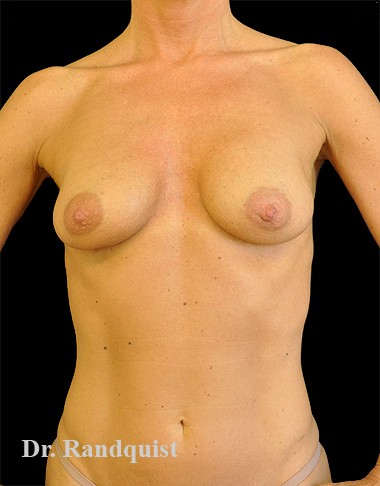
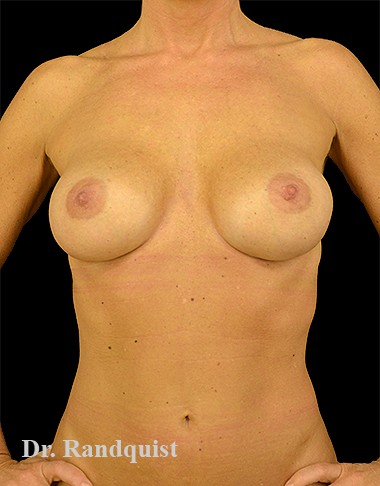
50 years old, 168 cm, 62 kg, 360 cc
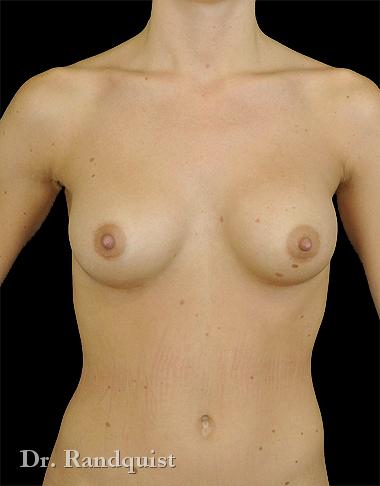
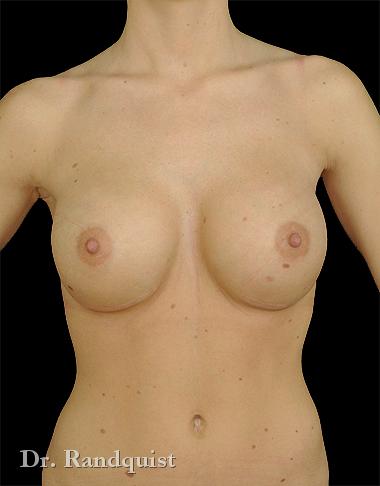
24 years old, 173 cm, 60 kg, 445 cc
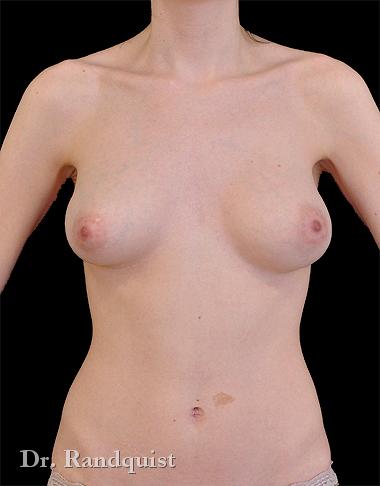
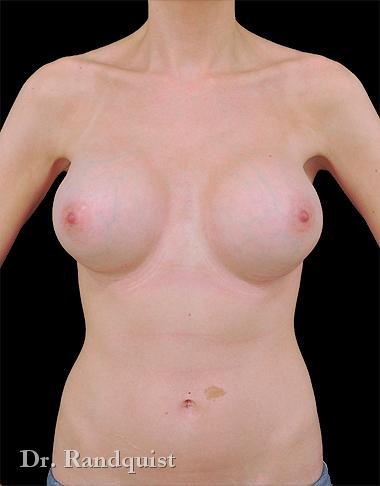
25 years old, 172 cm, 58 kg, 520 cc
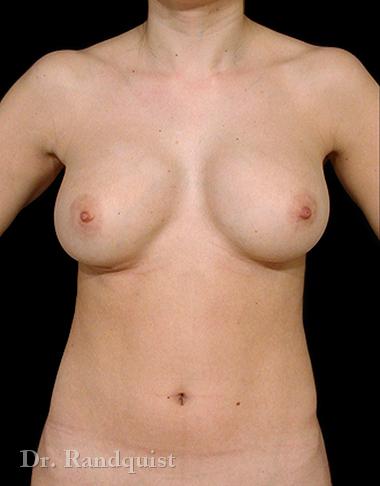
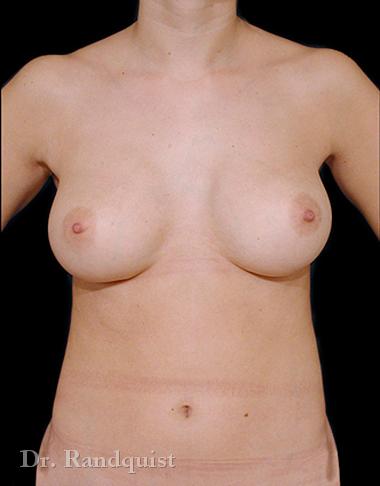
28 years old, 166 cm, 49 kg, 0 children
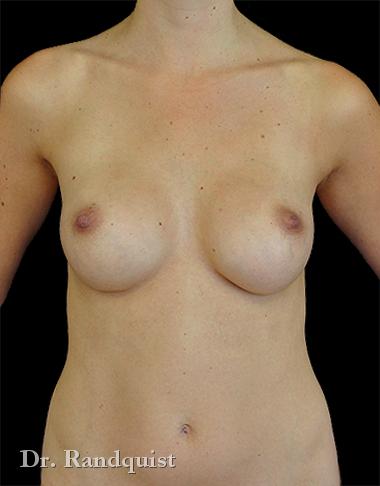
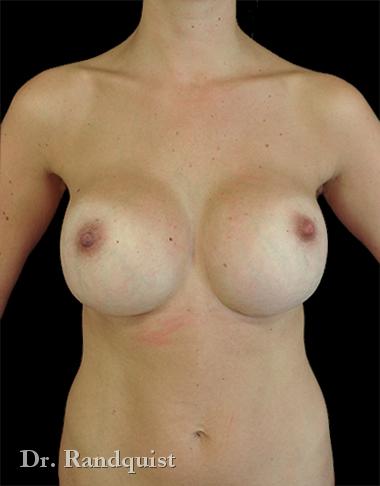
29 years old, 177 cm, 62 kg, 560 cc
Complications
Stretch marks
Stretch marks can occur when the dermis layer of the skin, which lies beneath the epidermis (the outermost layer of skin), is stretched and torn, something that usually happens during rapid growth or rapid weight change. Considering that breast augmentation, in a sense, entails rapid growth of the breast area, it is not surprising that implants CAN result in skin stretch marks.
The skin on the breast is generally quite elastic and resilient, making it very uncommon for stretch marks to develop as a result of breast augmentation. Stretch marks can form when the tissue cannot expand quickly or sufficiently to accommodate the growth that occurs, and this is almost never the case with women’s breasts.
However, stretch marks can sometimes occur as a complication of breast augmentation, and there are several factors that can increase the risk. One of these factors — implant size — is entirely controllable. The other — genetic predispositions — is not.
At the most basic level, it can be said that the larger the implant, the greater the risk of stretch marks. If your skin is strong and elastic, you may be able to increase your breast size significantly with minimal risk. However, if you’re prone to stretch marks—such as having thin skin with low elasticity—you may opt for a more moderate augmentation. If you’re unsure whether you’re prone to stretch marks, don’t hesitate to ask your plastic surgeon—they can help you understand your skin’s condition and guide you toward the best choice.
Can breast implants cause stretch marks? Yes, but only very rarely. With the right plastic surgeon, who helps you determine what works with your body, you are unlikely to be at risk of getting them at all.
Scarring
After a surgical incision, the body produces collagen to repair the “damage.” Collagen acts like cement, filling the space between two bricks. Always too much collagen is produced, which is why we also produce an enzyme called collagenase that “melts” away the excess collagen. This molding process lasts for months. Collagen is produced, and the surplus is removed to restore the skin’s original shape. If there is an excess of collagen left, a more prominent scar will form.
A perfect balance between collagen and collagenase leaves the slightest, barely noticeable scar. Often, however, we heal a little too well! After the skin has regenerated, the healing process continues—sometimes causing the scar to become larger than necessary. If we could stimulate our cells to produce extra collagenase, we would be able to dissolve this excess scar tissue.
Plastic surgeons and dermatologists have known for decades that there are ways to reduce the size of scars. However, until now, no method has been particularly comfortable. For example, it has been found that pressure bandages help increase the production of collagenase, and this has been used for burn treatment for over a century. Cortisone creams not only soothe irritated skin but also stimulate natural collagenase production. In extreme cases, doctors may use cortisone injections.
For decades, doctors have prescribed silicone sheets. Taping silicone film over a scar will reduce it. This was discovered in the early 1980s when a doctor attempted to apply even pressure to a scar using a silicone sheet. Scars treated with silicone appeared to diminish much more quickly. Vitamin E helps by working on the collagen fibers, making scars softer and more pliable.
Closing the skin after breast augmentation
The first step to achieving the best possible scar is to close the skin without tension. The skin may appear wrinkled initially, but it will smooth out over time.
After the skin is properly closed, what else can be done to minimize scarring?
What we do at Victoriakliniken is tape the breasts with silicone for 6 months after surgery. If you wish to continue treating the scar, vitamin E or a vitamin E-rich oil massaged into the skin can help. Massaging with oil by “folding macaroni” along the scar, upward and downward, often helps soften the scar and make it more flexible (this also works well for other scars, such as those from a cesarean section).
Breast Implant Associated Anaplastic Large Cell Lymphoma
BIA-ALCL is a relatively new and very rare condition, but it is important for all patients with breast implants to be aware of it. It is believed to be caused by the texturing of breast implants, which in some cases creates a chronic inflammatory process inside the breast cavity.
Bottoming-out
“Bottoming out” typically occurs in slender patients with very little breast tissue and skin coverage, combined with large implants. It is more likely to happen if the implant is placed above the muscle and is less common with implants placed completely under the muscle. The type of implant does not matter in this context; bottoming out can occur with smooth, textured, saline-based, or silicone-based implants. However, there is an increased risk with smooth implants.
Loss of sensation
All breast surgeries can result in the breast and/or nipple becoming either overly sensitive or not sensitive enough. This change can vary in degree and may be temporary or permanent. It can affect sensation during breastfeeding or sexual response.
During the healing process, you may experience numbness or hypersensitivity—or sometimes both. This typically subsides over time. It is important to remember that it can take up to a year, sometimes two, for full sensation to return after a breast augmentation.
Rippling
There are many factors that can affect the risk of “rippling.” The most important are the quality and thickness of the patient’s skin and tissue, the choice of implant type and size, and the technique used by the surgeon. While skin type is not something that can be altered, the risk of rippling can be minimized by choosing “denser” silicone implants (form-stable) that are not wider than the patient’s natural breasts, and by placing the implant under the muscle.
Rotation
All implants can rotate. This is usually not visible but is more apparent with anatomical (teardrop-shaped) implants, as they are asymmetric. If round implants rotate, the shape of the breast is not affected. When an anatomical implant rotates, the shape of the breast becomes distorted. If it is a simple rotation, the implant can be repositioned during a revision surgery (and, if necessary, the pocket in which the implant rests can be adjusted), or it may be replaced with round implants.
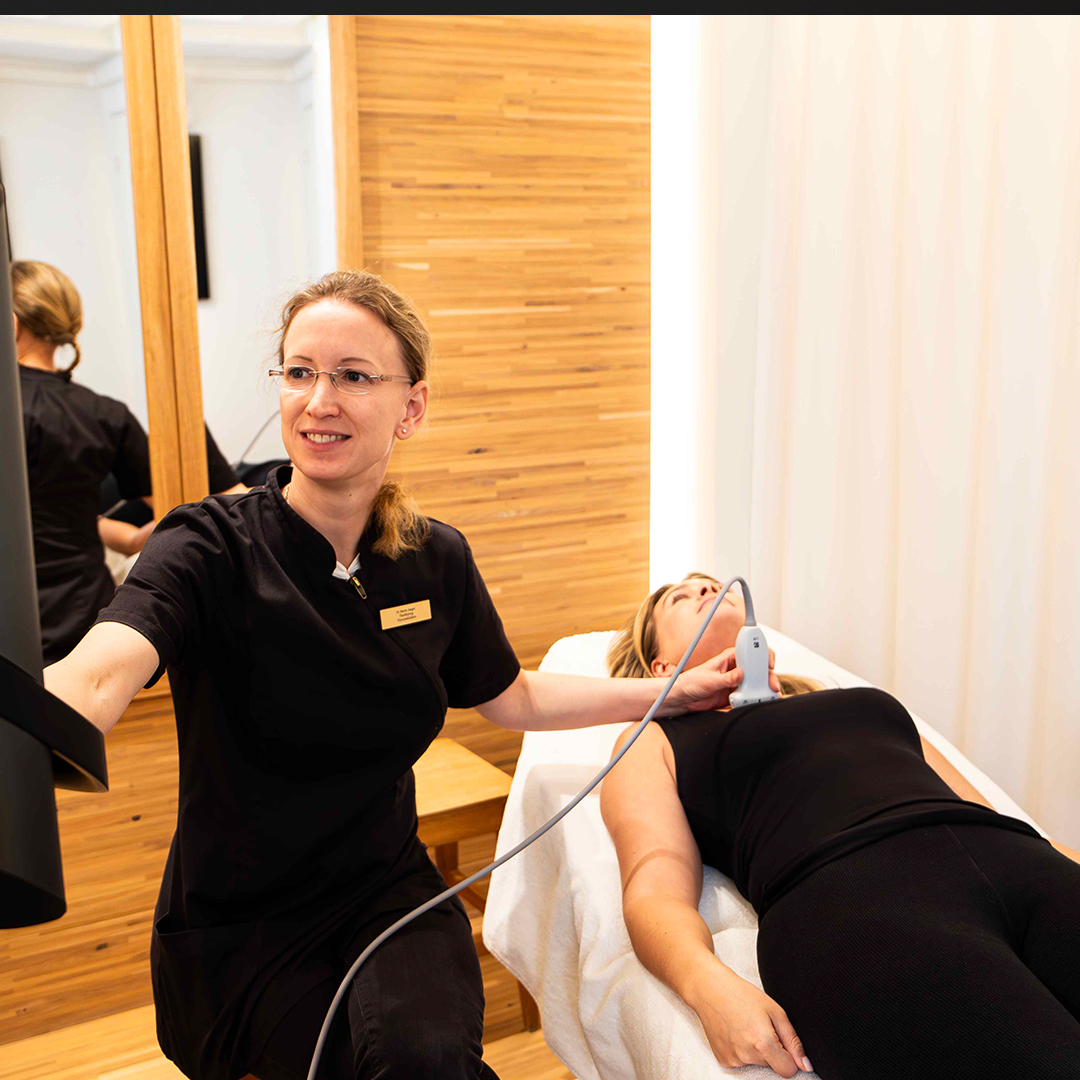
Implant check with ultrasound.
At the Victoria Clinic, we have opened IBICC — International Breast Implant Check Clinic — where we offer examinations of breast implants using ultrasound.
For those who have undergone surgery at the Victoria Clinic, follow-up with ultrasound is included for 10 years.
This makes it possible to ensure the condition of the implants and to consider an implant replacement should it be necessary.
Frequently asked questions about implant replacement at the Victoria Clinic in Stockholm
Why do you need to replace breast implants?
There are several reasons for replacing breast implants. Common causes include:
-
Complications: Capsular contracture, rupture, or other problems with the existing implants.
-
Aesthetic preferences: Changed desires regarding the size or shape of the breasts.
-
Age and lifestyle changes: The shape of the breasts and the durability of the implants can be affected by age, pregnancy, and other lifestyle factors.
-
Health monitoring: We recommend regular check-ups of breast implants to detect any potential problems at an early stage.
How is an implant replacement performed?
During an implant replacement, the old implants are removed and replaced with new ones. The operation is usually performed through the old incision in the breast fold. Sometimes it may be necessary to also remove the capsule around the implant.
What types of implants do you use for implant replacement?
We use implants from leading manufacturers such as Motiva and Mentor. We offer both round and anatomical implants, with different surfaces and sizes. Our surgeons will help you choose the implant that best suits your desires and anatomical conditions.
What is a capsulectomy?
Capsulectomy is a procedure where the capsule that has formed around the implant is removed. It may be necessary during implant replacement if the capsule has become too thick or if it is causing discomfort.
Can one combine implant replacement with fat grafting?
Yes, in some cases, one can combine implant replacement with fat grafting (hybrid breast augmentation) to achieve an even more natural result.
How much does an implant replacement cost in Stockholm?
The price for an implant replacement at Victoriakliniken in Stockholm starts from SEK 65,000. The price may vary depending on the extent of the procedure and your individual needs. For patients who have already undergone surgery at Victoriakliniken, the price for implant replacement with a complete capsulectomy starts from SEK 79,000.
How do I prepare for an implant replacement?
Before an implant replacement, you will receive detailed instructions on how to prepare, including diet, fluids, medication, and exercise. You will also undergo a medical examination with an ECG, blood tests, and an InBody test.
Hur lång är återhämtningstiden efter ett implantatbyte?
The recovery time varies from person to person, but you can usually return to work after 2-3 weeks. However, it takes longer for the breasts to achieve their final shape.
What are the risks and complications associated with implant replacement?
As with all surgical procedures, there are certain risks, but these are rare. Possible complications include infection, bleeding, and capsular contracture.
Do you offer any form of guarantee for implant replacement?
Ja, vi erbjuder Sveriges mest omfattande trygghetsgaranti vid implantatbyte. Detta inkluderar 10 års kostnadsfri uppföljning av dina implantat med ultraljud och 5 års garanti mot komplikationer.
Price
We have chosen not to have a fixed price list, as each patient is unique with individual needs. In most cases, it’s only during the consultation that we can determine, together with you, which procedure(s) will be best to achieve a beautiful final result. With us, in addition to the surgery cost, anesthesia, medications, follow-up visits, compression garments, and bras are included, as well as, in most cases, at least one overnight stay after the surgery.
In general, all prices are shown including VAT, as all procedures and treatments, except those performed for medical reasons, have been subject to VAT since the turn of the year 2014/2015. In cases where the price is listed excluding VAT, it is because these procedures are always performed on a medical basis. (Prices below include VAT)
full capsulectomy (VK patients)
+ full capsulectomy (patients from other clinics)